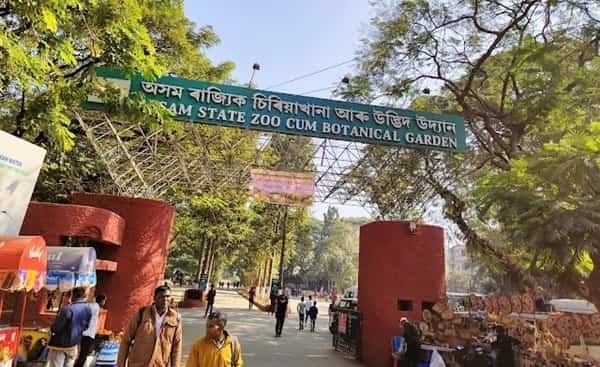
Guwahati Zoo feels less like a fenced attraction placed inside a city and more like a surviving patch of forest around which the city has grown. Officially called the Assam State Zoo cum Botanical Garden, it spreads across about 1.75 sq km among the gently undulating Hengerabari hillocks. Roughly 110 hectares of the property are natural forest, with large enclosures, perennial water bodies, botanical collections and shaded paths giving the zoo its reputation as one of Guwahati’s important green lungs.
The collection also has a strong North-East Indian identity. Along with familiar zoo animals, visitors can look for species closely associated with the region, including the one-horned rhinoceros, hoolock gibbon, golden langur, stump-tailed macaque, slow loris and clouded leopard. A botanical garden, museum, reptile house and extensive plant collections mean the visit works well for families and students who want more than a quick round of animal cages.
Quick About Guwahati Zoo
| Particular | Details |
| Official name | Assam State Zoo cum Botanical Garden |
| Established | 1957 |
| Location | R.G. Baruah Road / Hengrabari area, Guwahati, Assam |
| Area | About 1.75 sq km |
| Typical timing | 8:00 AM to 4:00 PM |
| Weekly closure | Friday |
| Common current entry rate | Around Rs. 30 adult; Rs. 10 child |
| Known for | North-East Indian fauna and botanical collections |
| Best time | October to March; morning |
| Government information | environmentandforest.assam.gov.in |
Opening and Closing Timing
| Particular | Days | Timing |
| Zoo and botanical garden | Saturday to Thursday | 8:00 AM to about 4:00 PM |
| Weekly closure | Friday | Closed |
| Best arrival window | Open days | 8:00 AM to 10:00 AM |
Current Guwahati visitor information consistently lists Friday as the weekly closure and an 8:00 AM opening. Closing-time listings can vary slightly between 4:00 PM and 4:30 PM, so visitors arriving late in the afternoon should confirm the day’s last-entry time at the gate.
Ticket Price
| Category | Indicative Current Price |
| Adult visitor | Around Rs. 30 |
| Child visitor | Around Rs. 10 |
| Very young children | May be free depending on age rule |
| Additional facilities / rides | Charged separately where applicable |
The Assam Government’s main zoo information page describes the attraction in detail but does not prominently publish a current tariff table. The rates above are the commonly published 2026 visitor rates; because charges can be revised, travellers coming from outside Guwahati should check the current counter tariff before the visit.
What Makes Guwahati Zoo Different?
The strongest reason to visit is its regional collection. The zoo highlights wildlife of North-East India, including primates and smaller mammals that are rarely the focus at mainstream city zoos. One-horned rhinoceros, golden langur, hoolock gibbon, clouded leopard, binturong and slow loris give the animal collection a distinctive Assamese character.
The botanical side is equally important. Government information lists hundreds of native and exotic plant species, orchids, bamboo and palms, along with a museum and herbarium collection. The forested setting makes the walk feel more like a nature outing than a short amusement stop.
What to See at Guwahati Zoo
Popular sections include the mammal enclosures, reptile house, bird exhibits, museum and botanical garden. The zoo also holds exotic species alongside Indian fauna, so children can move between local conservation species and more familiar large animals.
Do not rush through only the front enclosures. The natural forest, water bodies and botanical sections are part of what makes this zoo worth several hours.
How to Reach Guwahati Zoo
From central Guwahati: The zoo is on the R.G. Baruah Road side of the city and is well connected by taxi, app cab, auto-rickshaw and city buses.
From Guwahati Railway Station: A taxi or auto is the simplest option. Allow extra time during office and school traffic because central Guwahati roads can become congested.
From Lokpriya Gopinath Bordoloi International Airport: The airport is on the western side of the city, so a direct cab is the most convenient choice. Travel time depends heavily on traffic.
Best Time to Visit Guwahati Zoo
October to March is the easiest season for a long walk. The weather is cooler and humidity is lower than during the peak monsoon months. Winter mornings are particularly pleasant inside the forested grounds.
If visiting in summer or the rainy season, arrive at opening time. The natural slopes and large campus can feel tiring in heat or humidity, and heavy rain can make paths less comfortable.
Visitor Facilities
The Assam Government lists resting shelters, drinking-water points, toilets, signage, waste bins and refreshment stalls among visitor amenities. The campus also includes educational and botanical attractions beyond the animal enclosures.
Because the zoo covers a broad, uneven area, comfortable footwear is important. Families with elderly members should keep the pace relaxed and use available transport or rest points where offered.
Important Rules Visitors Should Know
Do not feed, tease or call animals and do not throw food or objects into enclosures. Keep the natural forest area clean and use the waste bins provided.
Visitors should also avoid damaging plants in the botanical garden. The zoo is both a zoological and botanical conservation space, so the garden sections deserve the same care as the animal areas.
Frequently Asked Questions
Q. Is Guwahati Zoo closed on Friday?
Yes. Friday is the regular weekly closure day.
Q. Why is Guwahati Zoo called a botanical garden too?
The property includes extensive native and exotic plant collections, natural forest, orchids, bamboo and other botanical displays in addition to animal enclosures.
Q. What animals are especially worth seeing here?
The North-East Indian species are the highlight, particularly the one-horned rhinoceros, hoolock gibbon, golden langur, clouded leopard and slow loris.
Q. How much time is needed?
Keep at least 3 to 4 hours. Visitors interested in the botanical garden and museum may want longer.
Q. Is the zoo suitable during the monsoon?
It remains a green and attractive visit, but humidity and rain can make the long walking route tiring. Morning entry and rain protection help.
Q. Should I confirm the ticket price before going?
Yes. The government information page does not prominently display a live tariff table, so checking the current counter rate is sensible if exact budgeting matters.